Vienna’s 2026 New Year’s Concert

Courtesy of Hauser & Wirth
Courtesy of Astra Marina Cabras
Courtesy of LA Art Show
Courtesy of Lukas Gansterer
Courtesy of Henge
Courtesy of Andreas Simopoulos
Courtesy of Dave Benett
Courtesy of Japan Mobility Show
Courtesy of ART Cologne
Courtesy of whenobjectswork / Kate Hume
Courtesy of Ivan Erofeev
Courtesy of Stéphane ABOUDARAM - WE ARE CONTENT(S)
Courtesy of Sacha Moreau / Global Gift Gala Monaco
Courtesy of Fadi Al Shami
Courtesy of Sofia Hartmann
Courtesy of Historyhd
Courtesy of Mick De Paola
Courtesy of the artist (c) VG Bild-Kunst, Bonn 2025. Photography by Jens Ziehe.
Courtesy of Yasamine June
Courtesy of Rawisara Prachaksubhanit
Courtesy of Mariia Dred for Berlin Fashion Week
Courtesy of Michael Fousert
Courtesy of Raden Prasetya
Courtesy of Antonia Tewes
Courtesy of Antonia Tewes
Courtesy of Carlo Bazzo
Courtesy of Artem Zakharov
Courtesy of James Cochrane / Copenhagen Fashion Week SS26
Courtesy of Fashion Week Studio
Courtesy of Burak Goraler / AFW
Courtesy of Antonia Tewes
Courtesy of SF / Luigi Caputo
Courtesy of Bruno Cordioli / CC BY 2.0 via Wikimedia Commons
Courtesy of Dubai Fashion Week / Ruzaini Official
Courtesy of Frieze Seoul 2025 / Wecap Studio
Courtesy of LecartPhotos
Courtesy of Jacopo Salvi / La Biennale di Venezia / ASAC Photo
Courtesy of Campione d’Italia’s Classic Circuit
Courtesy of Maxi Yacht Rolex Cup
Courtesy of Jochem Raat
Courtesy of Corey Watson
Courtesy of Pitti Immagine / Fragranze
Courtesy of Le Sable
Courtesy of Once Milano
Courtesy of Monaco Yacht Show
Photo by Darren Carroll/PGA of America
Courtesy of Guy Bell / British Art Fair
Photo by Sean Zanni / Patrick McMullan via Getty Images
Courtesy of Messe München GmbH / Thomas Plettenberg
Courtesy of ph G Martin-Raget/SNST
Courtesy of David Pupăză
Courtesy of Derek Rose
Courtesy of Jim Winslet
Courtesy of Millie Turner/BFI
Photo by Hugo Glendinning. Courtesy of Frieze
Courtesy of Rolex / Kurt Arrigo
Courtesy of Laura Dupuy
Courtesy of Palm Beach Show Group
Courtesy of Getty Images for Perelman Perfor
Courtesy of BFA 2025
Images credited Jason Alden courtesy of LAPADA
Courtesy of Informa Markets
Courtesy of The Qatar Boat Show
Courtesy of Getty Images for Baby2Baby
Courtesy of Jeanne Canto
Courtesy of Darian DiCianno
Courtesy of David Long/Cancer Research UK
Courtesy of Saslong Classic Club
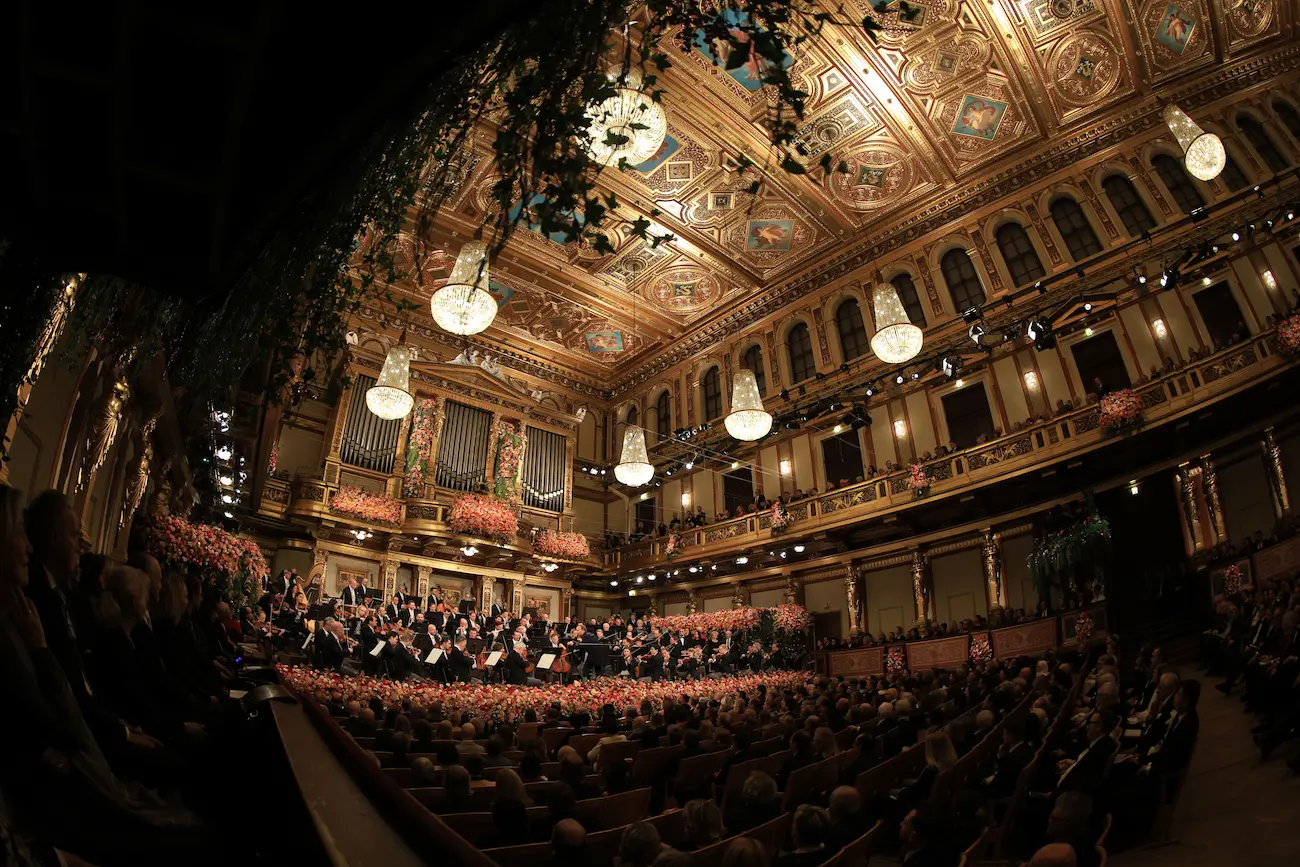
Courtesy of Dieter Nagl für die Wiener Philharmoniker
Courtesy of Derek Rose
Courtesy of Lukas Gansterer
Courtesy of Sam Frost
A
T
I
S
I
O
O
T
M
I
L
L
L
C
S
S
T
T
A
T
H
F
T
E
F
O
A
T
F
I
T
T
T
T
I
I
T
I
O
P
S
A
S
U
O
A
E
G
B
I
A
I
L
I
T
M
O
G
U
I
L
S
N
I
D
U
T
A
F
I
W
F
O
A
A
M
L
I
V
I
I
S
A
J
n January 1, 2026, the Vienna Philharmonic ushered in the New Year with its storied concert in the gilded Golden Hall of the Musikverein. This edition marked the grand finale of Johann Strauss II’s bicentenary celebrations. The concert was beamed live worldwide, part of the world’s most-watched classical broadcast, reaching roughly 50 million viewers across 150 countries. In the spirit of both tradition and renewal, the Vienna Philharmonic chose Canadian maestro Yannick Nézet-Séguin as its conductor.
Nézet-Séguin’s Vision and Debut
Yannick Nézet-Séguin conducts with infectious energy during his first appearance at the Vienna New Year’s Concert, promising to blend the traditional Strauss repertoire with fresh repertoire. In the Golden Hall’s brisk New Year’s morning, the baton passed to a new generation. Yannick Nézet-Séguin, music director of the Philadelphia Orchestra and the Metropolitan Opera, became the first North American ever to conduct this famed concert. Internationally acclaimed for his vibrant vision and spirited conducting, Nézet-Séguin has long championed underrepresented composers. Indeed, his input shaped the repertoire: drawing on his deep ties to the Vienna Philharmonic and its traditions, he crafted a program that nodded to the Strauss legacy while opening windows to new voices. This dual focus reflected not just musical savvy but also the polished zeitgeist of the concert, a rarefied meeting of heritage and modernity, much like Nézet-Séguin himself, who at 44 is both Grammy-winning and globally hip.

Program Premieres by Weinlich and Price
The 2026 program introduced several New Year’s Concert premieres. The orchestra presented Sirenen Lieder by Josephine Weinlich, an 1850s Viennese violinist-composer, in Wolfgang Dörner’s arrangement. It also performed the Rainbow Waltz by Florence Price, an Arkansas-born composer who in 1933 became the first black female composer to have a symphony performed by a major American orchestra.
A Gilded Global Spectacle
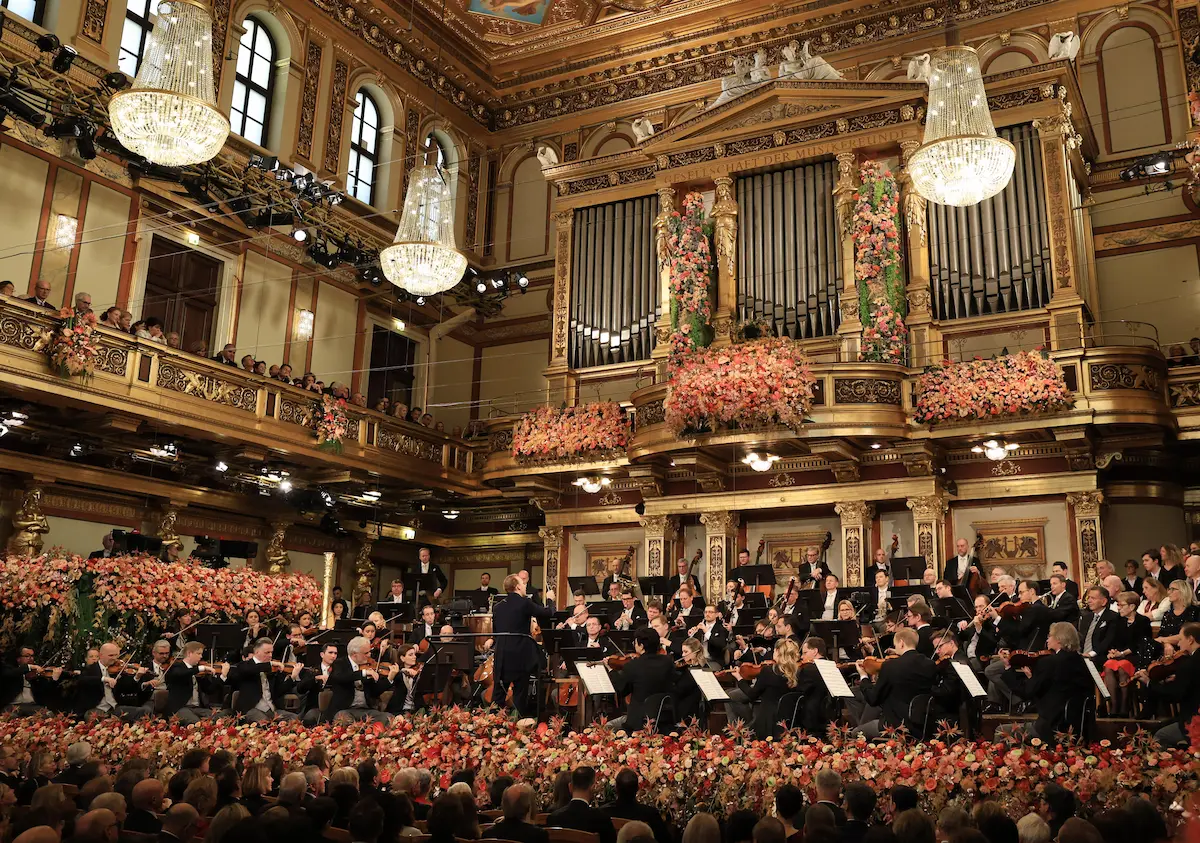
The Vienna Philharmonic on stage in the Musikverein’s legendary Golden Hall, bedecked in lavish floral arrangements. Each New Year’s Day, this resplendent hall becomes the locus of a worldwide cultural ritual. The 2026 concert was as much a feast for the eyes as for the ears. For days before the event, the city’s gardeners and florists transformed the Golden Hall with orchids, roses and cascading greenery, a tradition that has adorned the stage in a resplendent sea of blossoming floral color for high-society viewers worldwide.
Rolex and Cultural Patronage
Luxury branding is inseparable from this concert. Since 2009, Rolex has presented the Vienna New Year’s Concert, reflecting the brand’s long-standing image as a patron of the arts. In corporate messaging, Rolex stresses that it embraces partnerships with many of the world’s leading artists and prestigious institutions, including musicians, concerts and orchestras in order to perpetuate artistic heritage. Its New Year’s sponsorship, now in its 17th year, ties directly into that ethos. On a practical level, Rolex’s name appears on every broadcast credit and printed program, underscoring an image of continuity: the same marque that backs astronautical expeditions and haute horology is here aligning itself with Viennese musical legacy. For attendees and viewers alike, the presence of Rolex is a subtle signal of prestige, a reminder that this is not just any concert, but one of elite cultural standing.
Tradition, Renewal and High Society
The Vienna New Year’s Concert is less a casual show than a refined ritual for Europe’s cultural elite. Patrons in evening dress and international dignitaries share the golden balconies; tickets are famously scarce, allocated by lottery months in advance. On January 1, 2026, those lucky ticket-holders witnessed a ceremony both time-honored and forward-looking. The concert’s finale, inevitably the Radetzky March, sent guests into applause and champagne. More broadly, the event is a reminder that high culture can still unite the globe: in a world of fleeting media, here was a measured celebration uniting royalty, celebrities and billions of viewers through Strauss’s timeless melodies. With Yannick Nézet-Séguin at the helm, Vienna’s 2026 New Year’s Concert elegantly bridged past and present, a cultivated encore to the Strauss anniversary and a stylish prelude to the year ahead.