Where the Art Year Finds Its Measure at London Art Fair

Courtesy of Hauser & Wirth
Courtesy of Astra Marina Cabras
Courtesy of LA Art Show
Courtesy of Lukas Gansterer
Courtesy of Henge
Courtesy of Andreas Simopoulos
Courtesy of Dave Benett
Courtesy of Japan Mobility Show
Courtesy of ART Cologne
Courtesy of whenobjectswork / Kate Hume
Courtesy of Ivan Erofeev
Courtesy of Stéphane ABOUDARAM - WE ARE CONTENT(S)
Courtesy of Sacha Moreau / Global Gift Gala Monaco
Courtesy of Fadi Al Shami
Courtesy of Sofia Hartmann
Courtesy of Historyhd
Courtesy of Mick De Paola
Courtesy of the artist (c) VG Bild-Kunst, Bonn 2025. Photography by Jens Ziehe.
Courtesy of Yasamine June
Courtesy of Rawisara Prachaksubhanit
Courtesy of Mariia Dred for Berlin Fashion Week
Courtesy of Michael Fousert
Courtesy of Raden Prasetya
Courtesy of Antonia Tewes
Courtesy of Antonia Tewes
Courtesy of Carlo Bazzo
Courtesy of Artem Zakharov
Courtesy of James Cochrane / Copenhagen Fashion Week SS26
Courtesy of Fashion Week Studio
Courtesy of Burak Goraler / AFW
Courtesy of Antonia Tewes
Courtesy of SF / Luigi Caputo
Courtesy of Bruno Cordioli / CC BY 2.0 via Wikimedia Commons
Courtesy of Dubai Fashion Week / Ruzaini Official
Courtesy of Frieze Seoul 2025 / Wecap Studio
Courtesy of LecartPhotos
Courtesy of Jacopo Salvi / La Biennale di Venezia / ASAC Photo
Courtesy of Campione d’Italia’s Classic Circuit
Courtesy of Maxi Yacht Rolex Cup
Courtesy of Jochem Raat
Courtesy of Corey Watson
Courtesy of Pitti Immagine / Fragranze
Courtesy of Le Sable
Courtesy of Once Milano
Courtesy of Monaco Yacht Show
Photo by Darren Carroll/PGA of America
Courtesy of Guy Bell / British Art Fair
Photo by Sean Zanni / Patrick McMullan via Getty Images
Courtesy of Messe München GmbH / Thomas Plettenberg
Courtesy of ph G Martin-Raget/SNST
Courtesy of David Pupăză
Courtesy of Derek Rose
Courtesy of Jim Winslet
Courtesy of Millie Turner/BFI
Photo by Hugo Glendinning. Courtesy of Frieze
Courtesy of Rolex / Kurt Arrigo
Courtesy of Laura Dupuy
Courtesy of Palm Beach Show Group
Courtesy of Getty Images for Perelman Perfor
Courtesy of BFA 2025
Images credited Jason Alden courtesy of LAPADA
Courtesy of Informa Markets
Courtesy of The Qatar Boat Show
Courtesy of Getty Images for Baby2Baby
Courtesy of Jeanne Canto
Courtesy of Darian DiCianno
Courtesy of David Long/Cancer Research UK
Courtesy of Saslong Classic Club
Courtesy of Dieter Nagl für die Wiener Philharmoniker
Courtesy of Derek Rose
Courtesy of Lukas Gansterer
Courtesy of Sam Frost
A
T
I
S
I
O
O
T
M
I
L
L
L
C
S
S
T
T
A
T
H
F
T
E
F
O
A
T
F
I
T
T
T
T
I
I
T
I
O
P
S
A
S
U
O
A
E
G
B
I
A
I
L
I
T
M
O
G
U
I
L
S
N
I
D
U
T
A
F
I
W
F
O
A
A
M
L
I
V
I
I
S
A
J
anuary in London is unforgiving. Which is precisely why London Art Fair matters. In 2026, the fair once again demonstrated that relevance at the start of the year is not declared, it is executed.
Why London Art Fair Still Sets the Tone
Now in its 38th edition, London Art Fair remains the UK’s most reliable market and curatorial bellwether. Held at the Business Design Centre in Islington from 21–25 January, with a structured press and VIP preview on 20 January, the fair occupies a specific role: it opens the season, sets tempo, and tests conviction.
Unlike global mega-fairs that trade in spectacle, London Art Fair is defined by calibration. Modern British art anchors the floor. Contemporary practice expands it. Collectors arrive informed, not impulsive. Galleries come prepared, not performative. In a climate where attention is fragile, that restraint is its advantage.
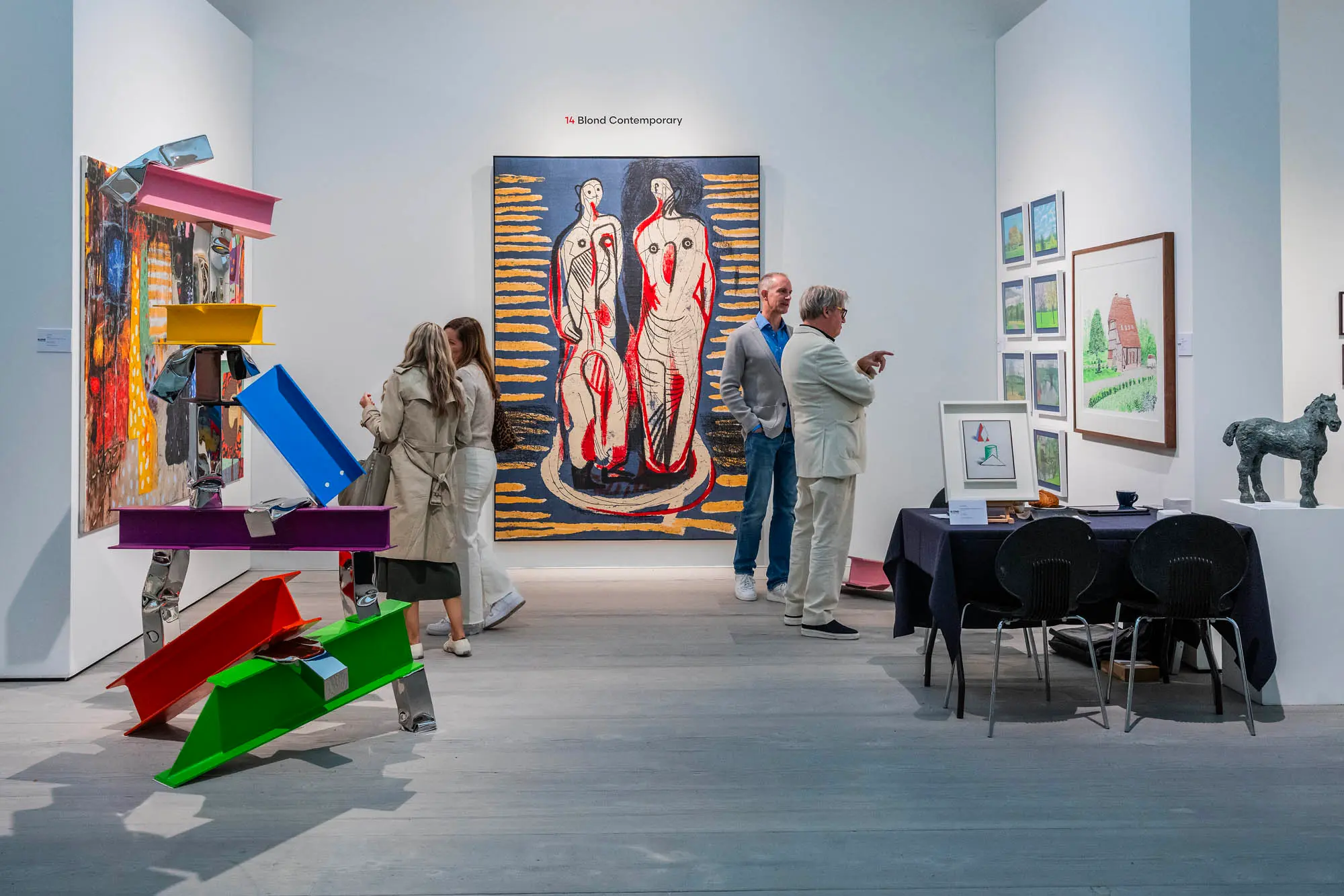
The fair’s dramaturgy followed a familiar but effective rhythm. The press preview was compact and controlled, allowing institutions, advisers, and senior collectors to move with purpose before the wider audience arrived. Spatially, the main fair remained legible: Modern British and twentieth-century works provided visual gravity, while contemporary presentations and curated sections created lateral movement rather than distraction.
Platform and Encounters were positioned not as side notes, but as deliberate counterpoints, slower zones where material, process, and emerging narratives required time. The talks programme unfolded in parallel, not competition, reinforcing the fair’s intellectual spine without pulling focus from the stands. The result was coherence. Nothing rushed. Nothing shouted.

Curated Highlights
The National Trust Partnership
Rather than staging a conventional museum display, the Trust translated two modernist homes into a composed exhibition language. Paintings, sculptures, furniture, and interiors were shown as systems, not isolated objects.
This was not nostalgia. It was a reminder that modernism was lived before it was collected. By situating art within domestic architecture, the presentation reframed value around context, continuity, and stewardship. For collectors increasingly interested in provenance beyond the label, this mattered.

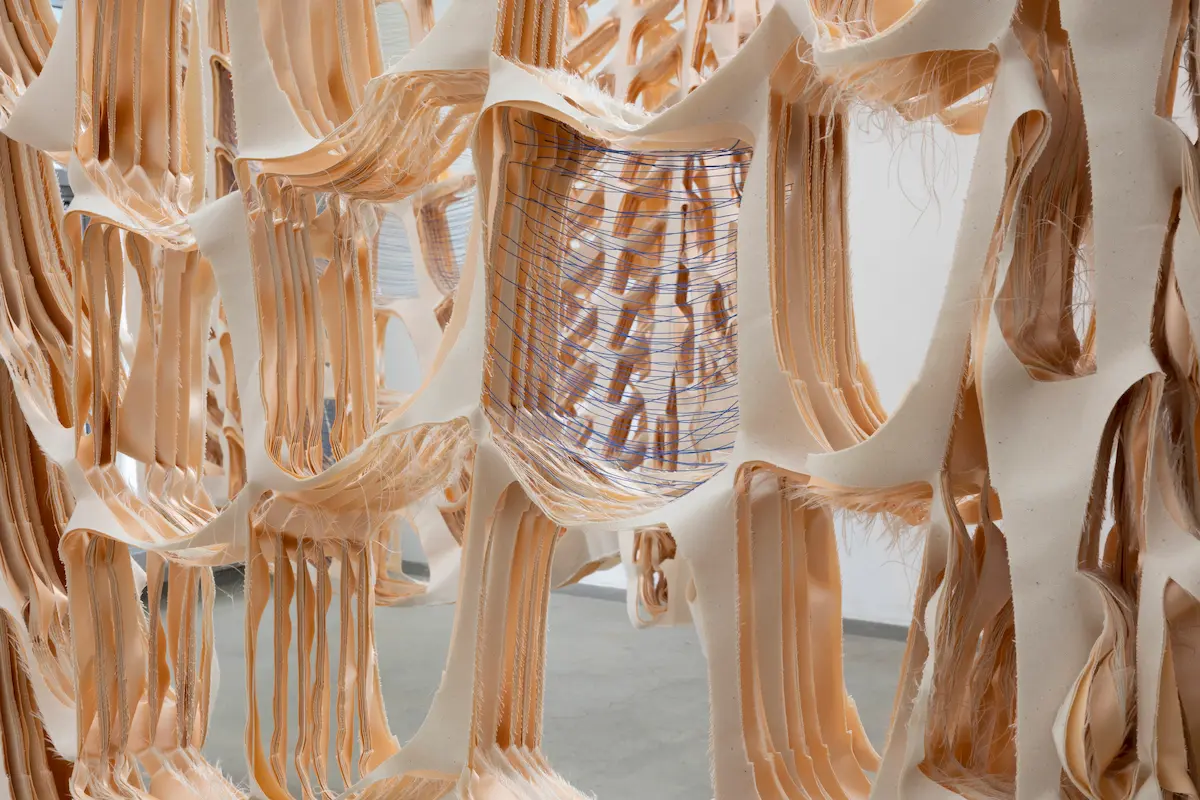
Material as Method
The section focused on artists working across textiles, ceramics, wax, and hybrid processes. The presentation resisted novelty for its own sake. Works were given space, surfaces were allowed to speak, and material intelligence replaced visual excess.Platform confirmed a broader shift visible across the fair: collectors are no longer separating craft from fine art, they are evaluating seriousness of process. This was not trend-led. It was structural. Material literacy is becoming a marker of connoisseurship.

International, Without Overstatement
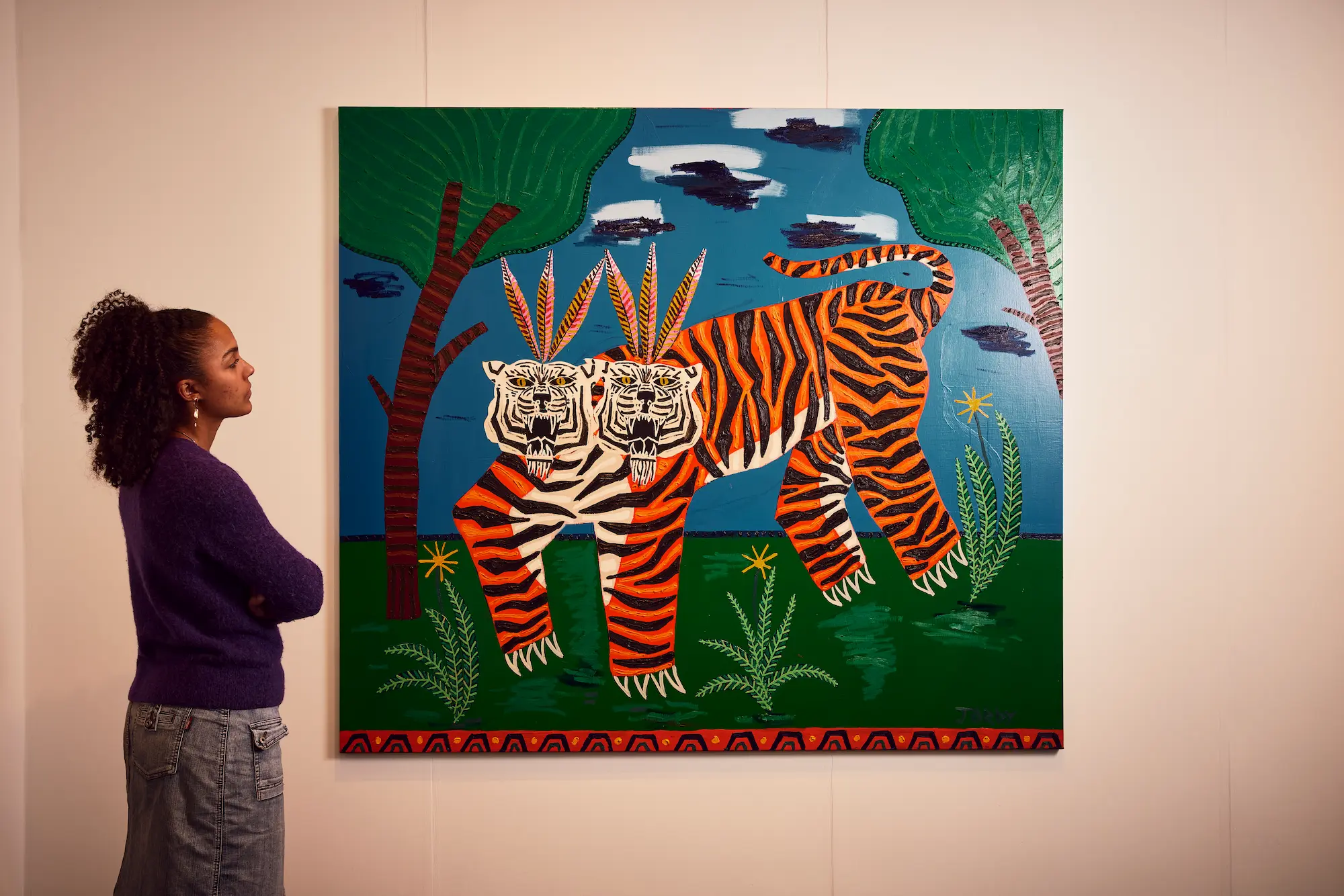
Encounters’ measured expansion of international voices.
Galleries from Japan, Turkey, Mexico, and beyond presented focused, disciplined stands. No flags. No forced narratives. Works addressed memory, identity, ecology, and care with clarity rather than declaration.
Encounters succeeded because it avoided urgency. In a year where global politics often dominate the conversation, the section allowed complexity to surface quietly. For collectors seeking long-term relevance rather than topical immediacy, this restraint resonated.
A Note on the Market
Sales and footfall were strong, with over 24,000 visitors reported across the week and notable confidence in both contemporary and Modern British works. Yet the more telling signal was behavioural: collectors arrived early, returned, and took time. Ceramics, textiles, and works by living artists performed well alongside blue-chip twentieth-century names. This was not speculative energy. It was considered buying.
Luxury isn’t an effect. Luxury is control.